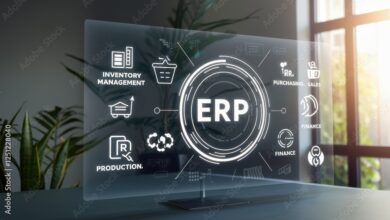
ERP system, a crucial tool for modern businesses, integrates various processes to enhance efficiency and productivity. This comprehensive overview delves into the key components, benefits, and challenges associated with ERP systems, offering valuable insights for organizations looking to streamline their operations.
In the following sections, we will explore the types of ERP systems, implementation strategies, module functionalities, customization and integration processes, security measures, upgrades and maintenance practices, mobile solutions, reporting and analytics capabilities, as well as future trends shaping the landscape of ERP systems.




Overview of ERP System
An Enterprise Resource Planning (ERP) system is a software solution that integrates various functions and departments within a business into a single system. This allows for the seamless flow of information and data across the organization, improving efficiency and decision-making.
Primary Components of an ERP System
An ERP system consists of several key components:
- Finance and Accounting: Manages financial transactions, budgeting, and reporting.
- Human Resources: Handles employee information, payroll, benefits, and performance evaluation.
- Supply Chain Management: Manages inventory, procurement, and order fulfillment.
- Customer Relationship Management: Tracks customer interactions, sales, and marketing campaigns.
- Manufacturing: Controls production processes, scheduling, and quality control.
Benefits of Implementing an ERP System
Implementing an ERP system offers several benefits to a business, including:
- Streamlined Processes: Eliminates redundant tasks and automates manual processes, increasing efficiency.
- Improved Data Accuracy: Centralizes data and reduces errors through standardized processes.
- Enhanced Decision-Making: Provides real-time insights and analytics for better strategic decisions.
- Cost Savings: Reduces operational costs by optimizing resources and improving productivity.
Importance of Integration in an ERP System
Integration is crucial in an ERP system as it ensures seamless communication and data flow between different departments. This integration allows for a holistic view of the organization, enabling better coordination and decision-making. By connecting various functions, integration eliminates silos and promotes collaboration, leading to improved overall performance and competitiveness.
Types of ERP Systems
Cloud-based ERP systems and on-premise ERP systems are two common types of ERP systems used by businesses. Cloud-based ERP systems are hosted on remote servers and accessed through the internet, offering flexibility and accessibility from anywhere with an internet connection. On-premise ERP systems, on the other hand, are installed and maintained on the company’s own servers and hardware, providing more control over data and security but requiring higher initial investment and maintenance costs.
Comparison of Cloud-based ERP Systems and On-premise ERP Systems
- Cloud-based ERP Systems:
- Examples: NetSuite, SAP Business ByDesign, Oracle ERP Cloud
- Scalability: Easily scalable with the ability to adjust resources based on business needs
- On-premise ERP Systems:
- Examples: SAP ERP, Microsoft Dynamics 365, Oracle E-Business Suite
- Scalability: Limited scalability requiring additional hardware and resources for expansion
Industry-specific ERP Systems vs. General ERP Systems
- Industry-specific ERP Systems:
- Designed to meet the unique needs of specific industries such as manufacturing, healthcare, or retail
- Examples: IQMS for manufacturing, Epicor for distribution, Meditech for healthcare
- General ERP Systems:
- Offer a broad range of functionalities that can be customized to fit different industries
- Examples: SAP ERP, Microsoft Dynamics 365, Oracle ERP Cloud
Implementation of ERP Systems
Implementing an ERP system in a company involves several critical steps, challenges, and best practices to ensure a successful deployment.
Steps in Implementing an ERP System
- Planning: Define clear objectives, scope, and timeline for the ERP implementation.
- Analysis: Evaluate current processes, identify gaps, and determine the requirements for the new system.
- Selection: Choose the right ERP software that aligns with your business needs and goals.
- Customization: Configure the ERP system to meet specific organizational requirements.
- Testing: Conduct thorough testing to ensure the system functions correctly and meets the desired outcomes.
- Training: Provide comprehensive training to employees to ensure they can effectively use the new ERP system.
- Go-Live: Transition to the new ERP system while ensuring minimal disruption to operations.
- Monitoring: Continuously monitor and evaluate the system’s performance to make necessary adjustments.
Challenges in ERP Implementation
- Resistance to Change: Employees may resist adopting new processes and technologies.
- Data Migration: Transferring data from legacy systems to the new ERP system can be complex and time-consuming.
- Cost Overruns: ERP implementations often exceed budget due to unforeseen expenses.
- Lack of Expertise: Inadequate knowledge and skills within the organization can hinder successful implementation.
Role of Training and Change Management
- Training: Proper training is crucial to ensure employees understand how to use the ERP system effectively.
- Change Management: Effective change management strategies help in addressing resistance and facilitating smooth adoption of the new system.
Best Practices for Smooth ERP Deployment
- Executive Leadership: Strong leadership support is essential for the success of ERP implementation.
- Communication: Transparent and open communication with all stakeholders is key to managing expectations.
- Project Management: Effective project management ensures timely delivery and adherence to budget.
- User Involvement: Involving end-users in the implementation process increases buy-in and acceptance of the new system.
- Continuous Improvement: Regularly evaluate and optimize the ERP system to maximize its benefits.
ERP System Modules
ERP systems consist of various modules that cover different aspects of a business. These modules work together to streamline operations, improve efficiency, and provide valuable insights for decision-making.
Finance Module
The finance module in an ERP system helps manage financial transactions, track expenses, generate financial reports, and ensure compliance with accounting standards. It integrates with other modules to provide real-time financial data for informed decision-making.
HR Module
The HR module automates HR processes such as payroll, employee management, recruitment, training, and performance evaluation. It centralizes HR data, streamlines workflows, and ensures compliance with labor laws and regulations.
Supply Chain Module
The supply chain module helps optimize supply chain operations by managing inventory, procurement, order processing, and logistics. It enables businesses to track products throughout the supply chain, minimize costs, and improve delivery efficiency.
Manufacturing Module
The manufacturing module controls production processes, schedules, quality control, and resource allocation. It helps businesses optimize production capacity, reduce lead times, and maintain product quality standards.
Sales and Marketing Module
The sales and marketing module manages sales processes, customer relationships, marketing campaigns, and lead generation. It provides insights into customer behavior, sales trends, and marketing effectiveness to drive revenue growth.
Inventory Management Module
The inventory management module tracks inventory levels, orders, stock movements, and warehouse operations. It helps businesses optimize inventory levels, reduce stockouts, and improve order fulfillment efficiency.
Customization and Integration
Customizing an ERP system is crucial to tailor it to the specific needs and workflows of a business. By customizing the system, companies can ensure that it aligns with their unique processes and requirements, ultimately leading to increased efficiency and productivity.
Importance of Customization
Customization allows businesses to optimize their ERP system to fit their operations seamlessly. This can involve configuring modules, workflows, reports, and interfaces to match the organization’s structure and objectives.
- Adapting the system to specific industry requirements
- Enhancing user adoption by simplifying processes
- Improving data accuracy and decision-making
Challenges of Integration
Integrating an ERP system with existing software applications can be complex and challenging. It requires careful planning, data migration, and testing to ensure a smooth transition without disruptions to daily operations.
- Data compatibility and mapping issues
- Customization conflicts with legacy systems
- User training and change management
Successful Customization and Integration Strategies
Successful ERP system customization and integration strategies involve a thorough analysis of business requirements, collaboration between IT and business teams, and phased implementation to minimize risks and ensure a successful deployment.
| Strategy | Description |
|---|---|
| Business Process Mapping | Identifying key processes to customize the system accordingly |
| Data Migration Plan | Developing a detailed plan for migrating data from existing systems |
| User Training and Support | Providing comprehensive training to users and ongoing support post-implementation |
Tips for Seamless Integration
Ensuring seamless integration when adopting an ERP system requires meticulous planning, clear communication, and continuous monitoring. Here are some tips to facilitate a smooth integration process:
- Engage stakeholders from the beginning
- Conduct thorough testing before going live
- Provide adequate training and support for users
- Establish clear communication channels for feedback and issue resolution
ERP System Security
In today’s digital age, ensuring the security of sensitive data within an ERP system is of paramount importance. Security measures are implemented to safeguard the information stored and processed within the system, protecting it from unauthorized access, breaches, and cyber threats.
Security Measures in ERP Systems
- Encryption: Data encryption techniques are utilized to encode information, making it unreadable to unauthorized users.
- Firewalls: Firewalls are implemented to monitor and control incoming and outgoing network traffic, preventing unauthorized access.
- Access Control: User authentication and authorization mechanisms are put in place to ensure that only authorized individuals have access to specific data and functionalities.
- Audit Trails: Audit trails track and record all user activities within the system, enabling the detection of any suspicious behavior or unauthorized access.
Risks of Inadequate Security Measures
- Data Breaches: Inadequate security measures can lead to data breaches, resulting in the exposure of sensitive information to malicious entities.
- Data Loss: Without proper security protocols, data stored in the ERP system is at risk of being lost or corrupted.
- Reputation Damage: Security breaches can tarnish the reputation of an organization, eroding trust among customers and stakeholders.
Role of User Access Control
- User access control plays a crucial role in maintaining ERP system security by ensuring that only authorized users can access specific data and functionalities.
- By implementing role-based access control, organizations can define access levels based on user roles and responsibilities, reducing the risk of unauthorized access.
Examples of Security Breaches
-
A security breach at Target in 2013 resulted in the exposure of credit card information of over 40 million customers, leading to reputational and financial damage for the company.
-
The Equifax data breach in 2017 compromised the personal information of 147 million individuals, highlighting the devastating consequences of inadequate security measures.
ERP System Upgrades and Maintenance
Regular upgrades and maintenance are crucial for the optimal functioning of an ERP system. This ensures that the system remains up-to-date, secure, and efficient in meeting the evolving needs of the organization.
Importance of Regular Upgrades and Maintenance
- Enhanced Security: Regular upgrades help in patching vulnerabilities and strengthening the security of the ERP system against potential cyber threats.
- Improved Performance: Maintenance tasks such as database optimization and system updates can enhance the performance and efficiency of the ERP system.
- Compliance and Compatibility: Upgrades ensure that the ERP system remains compliant with regulations and compatible with other software and technologies.
Challenges of Upgrading an ERP System
- Complexity: Upgrading an ERP system can be complex and time-consuming, requiring careful planning and coordination.
- Data Migration: Data migration during upgrades can be challenging, as it involves transferring large volumes of data without loss or corruption.
- User Training: Introducing new features through upgrades may require additional user training to ensure smooth adoption and utilization.
Role of Vendor Support in Maintenance
- Technical Assistance: Vendor support plays a key role in providing technical assistance, troubleshooting, and guidance during upgrades and maintenance tasks.
- Software Updates: Vendors release regular updates and patches to address issues and enhance the functionality of the ERP system.
- Training and Resources: Vendors often offer training resources and documentation to help organizations effectively manage upgrades and maintenance.
Best Practices for Managing Upgrades and Maintenance
- Establish a Schedule: Create a regular schedule for upgrades and maintenance tasks to ensure timely updates and optimizations.
- Testing Environment: Set up a testing environment to conduct thorough testing of upgrades before implementing them in the live system.
- Backup and Recovery: Maintain regular backups of data to prevent data loss during upgrades and have a robust recovery plan in place.
Mobile ERP Solutions
Mobile ERP solutions refer to the use of Enterprise Resource Planning systems on mobile devices such as smartphones and tablets. These solutions provide employees with real-time access to critical business information and processes, regardless of their location. The benefits of mobile ERP solutions include increased productivity, improved decision-making, enhanced collaboration, and flexibility in working remotely.
Challenges of Implementing Mobile ERP Solutions
Implementing mobile ERP solutions in a business environment can present various challenges. These may include ensuring data security and privacy, integrating mobile applications with existing ERP systems, providing adequate training to employees, and addressing compatibility issues with different mobile devices and operating systems.
Accessibility and Productivity Enhancement
Mobile ERP solutions enhance accessibility by allowing employees to access important business information anytime, anywhere. This accessibility leads to increased productivity as employees can complete tasks on-the-go, respond to customer inquiries promptly, and make informed decisions based on real-time data.
Successful Adoption in Industries
Several industries have successfully adopted mobile ERP solutions to streamline their operations and improve efficiency. For example, the manufacturing industry utilizes mobile ERP solutions to track inventory in real-time, manage production processes, and enhance supply chain visibility. The healthcare sector benefits from mobile ERP solutions by enabling healthcare providers to access patient records, schedule appointments, and communicate with colleagues seamlessly.
ERP System Reporting and Analytics
Reporting and analytics play a crucial role in optimizing business processes through an ERP system. By providing valuable insights and data-driven decision-making capabilities, reporting and analytics help organizations improve efficiency, identify trends, and make informed strategic decisions.
Types of Reports Generated by ERP Systems
ERP systems generate various types of reports to help users analyze different aspects of the business. These reports can include financial statements, inventory status, sales performance, production schedules, and more. Each report provides valuable information that enables stakeholders to monitor key metrics and make data-driven decisions to drive business growth.
- Financial Reports: These reports provide insights into the financial health of the organization, including income statements, balance sheets, cash flow statements, and budget variance analysis.
- Inventory Reports: These reports offer visibility into inventory levels, turnover rates, reorder points, and stockouts, helping optimize inventory management processes.
- Sales Reports: Sales reports track sales performance, customer trends, order fulfillment rates, and revenue forecasts, supporting sales and marketing strategies.
Effective reporting and analytics enable organizations to monitor performance, identify opportunities for improvement, and drive operational excellence.
Benefits of Real-time Data Analytics in an ERP System
Real-time data analytics in an ERP system allows organizations to access up-to-date information instantly. This enables timely decision-making, proactive problem-solving, and quicker responses to changing market conditions. By leveraging real-time data analytics, organizations can improve agility, enhance customer service, and gain a competitive edge in the market.
Key Performance Indicators (KPIs) Monitored Using ERP System Analytics
ERP system analytics help monitor key performance indicators that are essential for measuring the success of business operations. Some common KPIs tracked using ERP system analytics include:
- Sales Growth: Tracking sales revenue, customer acquisition rates, and sales pipeline performance.
- Inventory Turnover: Monitoring inventory levels, turnover rates, and stockout occurrences to optimize inventory management.
- Production Efficiency: Measuring production output, cycle times, and resource utilization to improve operational efficiency.
Future Trends in ERP Systems
The future of ERP systems is constantly evolving to meet the changing needs of businesses and to leverage emerging technologies. Let’s explore some of the key trends that are shaping the future of ERP systems:
AI Integration and Automation
AI integration and automation are expected to play a significant role in the future of ERP systems. By incorporating artificial intelligence and automation capabilities, ERP systems can streamline processes, improve decision-making, and enhance efficiency. AI-powered chatbots, predictive analytics, and machine learning algorithms are likely to become standard features in ERP systems, enabling businesses to drive innovation and stay competitive in the digital age.
Impact of Emerging Technologies like Blockchain
The impact of emerging technologies like blockchain on ERP systems is undeniable. Blockchain technology offers a secure and transparent way to record transactions, track goods, and streamline supply chain processes. Integrating blockchain into ERP systems can enhance data security, reduce fraud, and increase trust among stakeholders. As blockchain continues to mature, we can expect to see widespread adoption of this technology in ERP systems across various industries.
Possibilities of IoT and Machine Learning
The combination of IoT (Internet of Things) and machine learning holds immense potential in shaping the future of ERP systems. IoT devices can collect real-time data from various sources, enabling ERP systems to make informed decisions and optimize operations. Machine learning algorithms can analyze vast amounts of data to uncover insights, predict trends, and automate routine tasks. By harnessing the power of IoT and machine learning, ERP systems can become more intelligent, adaptive, and responsive to changing business environments.
Evolution of ERP Systems to Meet Changing Business Needs
As businesses continue to evolve and digitize, ERP systems will need to adapt to meet their changing needs. The future of ERP systems may involve greater customization options, modular architectures, and cloud-based solutions. Businesses are seeking more flexibility, scalability, and agility from their ERP systems to support growth and innovation. By embracing new technologies and design principles, ERP systems can evolve to become more user-friendly, intuitive, and integrated with other business applications.
Final Summary
As businesses continue to evolve in a rapidly changing digital landscape, the role of ERP systems becomes increasingly vital. By embracing the best practices and staying abreast of emerging trends, organizations can leverage ERP solutions to drive growth, innovation, and competitive advantage in the marketplace.

Contributing author focused on delivering fresh perspectives and timely information.